Training of Trainers (ToT) Digital Literacy & Gender-Informed Digital Upskilling
Section outline
-
Dear Participant,
Welcome to the Bridge4Mothers Training of Trainers (ToT) Programme for Digital Literacy & Gender-Informed Digital Upskilling.
We are very pleased to welcome you to this learning journey focused on:
-
inclusive education,
-
digital literacy,
-
blended learning,
-
and gender-informed Vocational Education and Training (VET).
This programme has been designed to support:
-
VET trainers,
-
facilitators,
-
adult educators,
-
educational staff,
-
and organisations working with vulnerable women.
The programme equips participants with competences in:
-
digital literacy teaching,
-
inclusive facilitation,
-
blended pedagogy,
-
learner-centred methodologies,
-
and supportive assessment approaches.
-
-
-
Bridge4Mothers is an Erasmus+ KA210-VET project that aims to:
-
support vulnerable mothers in VET,
-
strengthen digital and personal competences,
-
improve employability and inclusion,
-
and promote flexible and gender-informed educational opportunities.
The project is implemented in:
-
Germany,
-
Greece,
-
Bulgaria,
-
and Türkiye.
The ToT programme was developed based on:
-
surveys,
-
focus groups,
-
competence roadmap findings,
-
and identified gaps in inclusive and digital education practices.
-
-
-
-
-
-
Throughout this programme, participants will strengthen competences in:
Gender-Informed Pedagogy
-
inclusive facilitation
-
trauma-sensitive approaches
-
learner-centred communication
-
creating safe learning environments
Digital Literacy Teaching
-
digital skills facilitation
-
step-by-step digital instruction
-
accessible digital learning
-
supporting low-confidence learners
Blended Learning
-
Moodle tools and activities
-
online facilitation
-
blended course design
-
flexible participation models
Assessment & Learner Support
-
formative assessment
-
reflective learning
-
peer feedback
-
inclusive evaluation methods
-
-
-
-
-
-
This Moodle course includes:
-
learning modules,
-
presentations,
-
readings,
-
practical activities,
-
discussion forums,
-
reflection tasks,
-
assignments,
-
and collaborative exercises.
The course combines:
-
self-paced learning,
-
online interaction,
-
practical application,
-
and peer collaboration.
Participants are encouraged to:
-
participate actively,
-
reflect on educational practice,
-
collaborate respectfully,
-
and apply learning to real educational settings.
-
-
-
-
-
-
Participants are expected to:
-
complete learning activities,
-
engage respectfully in discussions,
-
collaborate with peers,
-
participate in practical exercises,
-
and reflect critically on inclusive teaching practice.
This learning environment is:
-
respectful,
-
supportive,
-
collaborative,
-
and learner-centred.
The goal of this programme is:
-
growth,
-
reflection,
-
confidence-building,
-
and professional development.
-
-
-
-
-
-
Participants may access support through:
-
Moodle messaging,
-
discussion forums,
-
facilitators,
-
and project staff.
Technical and educational support will be available throughout the programme.
-
-
-
-
-
-
We hope this programme helps you:
-
strengthen your facilitation skills,
-
create more inclusive learning environments,
-
and support vulnerable learners more effectively.
Welcome to the Bridge4Mothers ToT Programme.
-
-
-
-
-
-
This self-assessment will help you reflect on:
-
your digital competences,
-
facilitation experience,
-
blended learning confidence,
-
and inclusive teaching practices.
There are no right or wrong answers.
The purpose is to:
-
identify strengths,
-
recognise areas for development,
-
and support your professional learning journey.
-
-
-
-
-
-
-
-
Welcome to Module 1 of the Bridge4Mothers Training of Trainers Programme.
This module focuses on helping trainers and educational staff better understand the realities, barriers, and lived experiences of vulnerable mothers participating in Vocational Education and Training (VET).
Vulnerable mothers often face multiple and interconnected challenges related to:
-
caregiving responsibilities,
-
financial insecurity,
-
interrupted education,
-
limited digital access,
-
emotional stress,
-
social isolation,
-
and work-life-learning balance.
Understanding these realities is essential for creating:
-
inclusive learning environments,
-
flexible educational pathways,
-
supportive facilitation approaches,
-
and learner-centred VET experiences.
This module introduces trainers to:
-
structural and emotional barriers,
-
learner diversity,
-
intersectional challenges,
-
empathy-based facilitation,
-
and inclusive educational practices.
Participants will reflect on:
-
their own educational approaches,
-
assumptions and biases,
-
and strategies for supporting vulnerable learners effectively.
-
-
-
-
-
-
By the end of this module, participants will be able to:
-
understand the realities faced by vulnerable mothers in VET,
-
identify barriers affecting participation and engagement,
-
recognise emotional and structural inequalities,
-
strengthen empathy and inclusive awareness,
-
and adapt educational approaches to learner needs.
-
-
-
-
-
-
Participants will:
-
develop greater understanding of vulnerable learners’ realities,
-
strengthen inclusive facilitation competences,
-
identify barriers within educational environments,
-
and apply more learner-centred approaches in VET settings.
-
-
-
-
-
-
Total Estimated Time:
5–6 Hours
Including:
-
presentations,
-
readings,
-
case studies,
-
reflection activities,
-
discussions,
-
and assessment tasks.
-
-
-
-
-
-
-
-
Opened: Monday, 3 August 2026, 12:00 AMDue: Monday, 10 August 2026, 12:00 AM
-
-
-
-
-
To complete Module 1, participants must:
View all learning materials
Participate in discussion forum
Complete practical activities
Submit reflection assignment
Complete quiz/self-assessment
-
-
-
-
-
Congratulations on completing Module 1.
Understanding learners’ realities is an essential step toward creating:
-
inclusive,
-
flexible,
-
supportive,
-
and empowering VET environments.
Empathy, accessibility, and learner-centred facilitation are key foundations for meaningful educational participation and success.
-
-
-
-
-
-
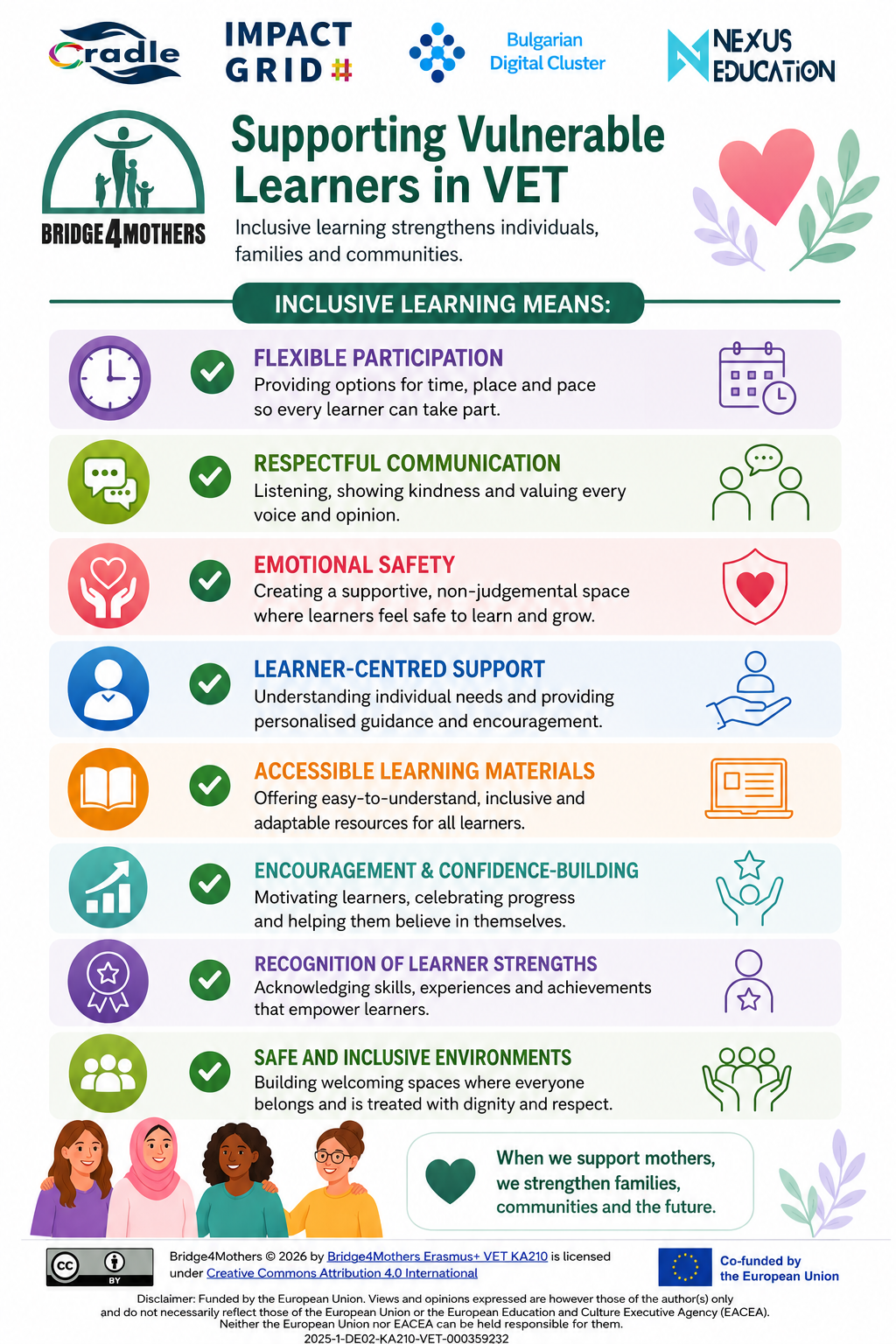
This module focuses on developing trainers’ understanding of gender-informed pedagogy and inclusive educational practices within Vocational Education and Training (VET).
Gender-informed pedagogy recognises that learners may experience education differently due to:
-
gender roles,
-
caregiving responsibilities,
-
social expectations,
-
discrimination,
-
unequal opportunities,
-
and structural inequalities.
For vulnerable mothers, these realities may affect:
-
confidence,
-
participation,
-
access to learning,
-
communication,
-
and educational progression.
This module introduces trainers to:
-
gender-sensitive facilitation,
-
inclusive communication,
-
trauma-sensitive educational approaches,
-
empowerment-based learning,
-
and learner-centred educational strategies.
Participants will reflect on:
-
educational bias,
-
representation,
-
inclusive classroom practices,
-
and the creation of equitable learning environments.
The module encourages trainers to create learning spaces that are:
-
respectful,
-
empowering,
-
accessible,
-
emotionally safe,
-
and supportive of diverse learner experiences.
-
-
-
-
By the end of this module, participants will be able to:
-
understand the principles of gender-informed pedagogy,
-
recognise barriers and inequalities affecting women learners,
-
identify unconscious bias in educational environments,
-
apply inclusive communication strategies,
-
and create supportive and empowering learning spaces.
-
-
-
-
-
-
Participants will:
-
strengthen awareness of gender-sensitive educational approaches,
-
improve inclusive facilitation practices,
-
create more equitable learning experiences,
-
and support learner participation and confidence more effectively.
-
-
-
-
-
-
Total Estimated Time:
5–6 Hours
-
-
-
-
-
-
-
Opened: Thursday, 15 October 2026, 12:00 AMDue: Thursday, 22 October 2026, 12:00 AM
-
-
-
-
To complete Module 2, participants must:
View all learning materials
Participate in discussion forum
Complete practical activities
Submit reflection assignment
Complete quiz/self-assessment
-
-
-
-
-
Congratulations on completing Module 2.
Gender-informed pedagogy helps create:
-
equitable,
-
inclusive,
-
supportive,
-
and empowering educational environments.
Respectful communication, emotional safety, and learner-centred facilitation are essential for strengthening participation, confidence, and long-term learning success.
-
-
-
-
-
-
-
-
Welcome to Module 3 of the Bridge4Mothers Training of Trainers Programme.
This module focuses on strengthening trainers’ digital competences and their capacity to teach digital literacy effectively to vulnerable learners.
Digital skills are increasingly essential for:
-
education,
-
communication,
-
employment,
-
social participation,
-
and lifelong learning.
However, many vulnerable learners may experience:
-
low digital confidence,
-
limited access to technology,
-
fear of digital environments,
-
interrupted learning experiences,
-
or limited prior exposure to digital tools.
This module supports trainers in:
-
developing accessible digital teaching methods,
-
understanding learner digital barriers,
-
teaching step-by-step digital skills,
-
facilitating inclusive digital learning,
-
and supporting learners with varying confidence levels.
Participants will also explore:
-
Microsoft Office,
-
Google Workspace,
-
online communication tools,
-
cybersecurity basics,
-
and AI tools for learning and employment.
The module promotes:
-
practical learning,
-
confidence-building,
-
digital accessibility,
-
and learner-centred digital facilitation.
-
-
-
-
-
-
By the end of this module, participants will be able to:
-
strengthen their own digital competences,
-
teach digital literacy using learner-centred approaches,
-
support learners with low digital confidence,
-
use common digital tools effectively,
-
design accessible digital learning activities,
-
and facilitate inclusive digital participation.
-
-
-
-
-
-
Participants will:
-
improve confidence in teaching digital skills,
-
apply accessible and flexible digital teaching methods,
-
support vulnerable learners more effectively,
-
and develop practical digital literacy learning activities.
-
-
-
-
-
-
Total Estimated Time:
6–7 Hours
Including:
-
presentations,
-
tutorials,
-
practical exercises,
-
collaborative activities,
-
and assessment tasks.
-
-
-
-
-
-
-
-
Opened: Thursday, 15 October 2026, 12:00 AMDue: Thursday, 22 October 2026, 12:00 AM
-
Opened: Thursday, 15 October 2026, 12:00 AMDue: Thursday, 22 October 2026, 12:00 AM
-
-
-
-
-
To complete Module 3, participants must:
View all learning materials
Participate in discussion forum
Complete practical activities
Submit digital literacy activity
Complete quiz/self-assessment
-
-
-
-
-
Congratulations on completing Module 3.
Inclusive digital literacy teaching helps learners:
-
build confidence,
-
strengthen participation,
-
improve employability,
-
and engage more actively in digital society.
Accessible, supportive, and learner-centred digital education is essential for reducing digital exclusion and empowering vulnerable learners.
-
-
-
-
-
-
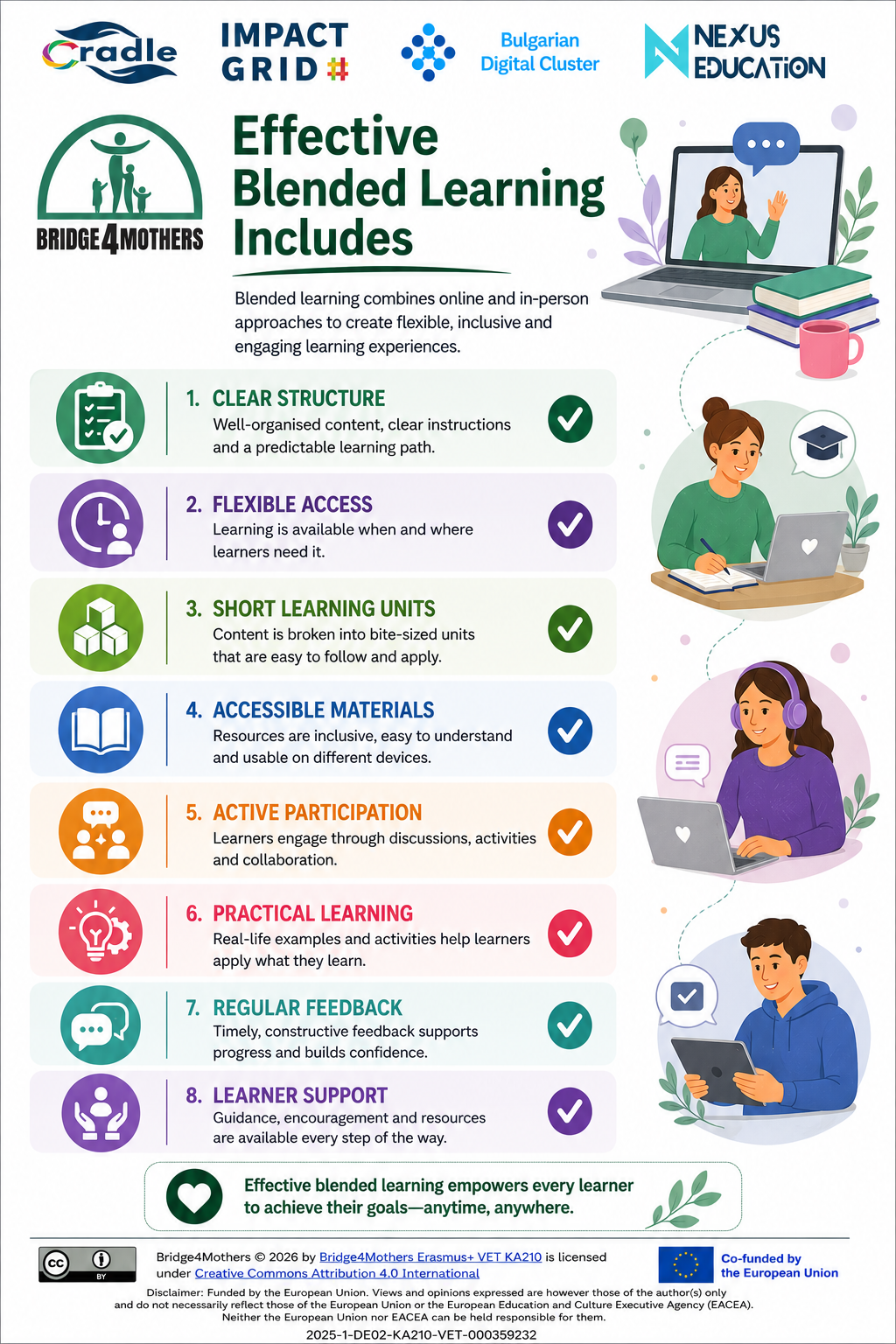
Blended learning combines:
-
in-person learning;
-
online learning;
-
independent activities;
-
and collaborative digital participation.
Flexible pedagogy is especially important for learners managing:
-
caregiving;
-
employment;
-
transport limitations;
-
emotional stress;
-
and changing availability.
-
-
-
-
Participants will be able to:
-
explain blended learning;
-
distinguish synchronous and asynchronous activities;
-
design flexible participation;
-
use Moodle effectively;
-
and maintain learning quality across different formats.
-
-
-
-
-
-
Participants will:
-
create blended PSL activities;
-
improve online engagement;
-
and provide accessible learning pathways.
-
-
-
-
-
-
6–7 hours
-
-
-
-
-
Opened: Saturday, 19 September 2026, 12:00 AMDue: Saturday, 26 September 2026, 12:00 AM
-
Opened: Saturday, 19 September 2026, 12:00 AMDue: Saturday, 26 September 2026, 12:00 AM
-
-
-
-
-
To complete Module 4, participants must:
View all learning materials
Participate in discussion forum
Complete Moodle practice activities
Submit blended lesson plan
Complete quiz/self-assessment
-
-
-
-
-
Flexible pedagogy is essential for supporting participation, confidence, and long-term engagement for vulnerable learners in VET.
-
-
-
-
-
Module Overview
Welcome to Module 5 of the Bridge4Mothers Training of Trainers Programme.
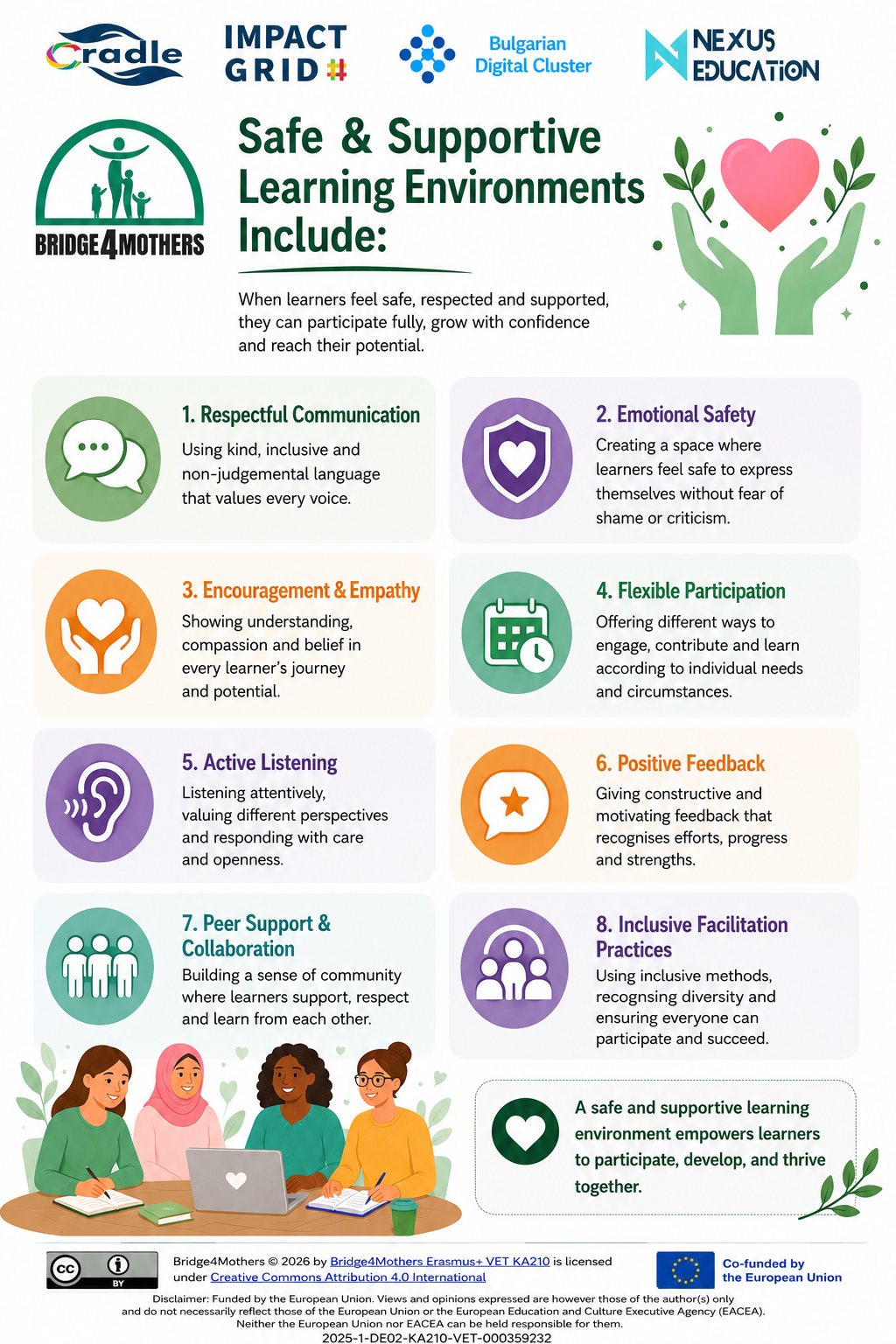
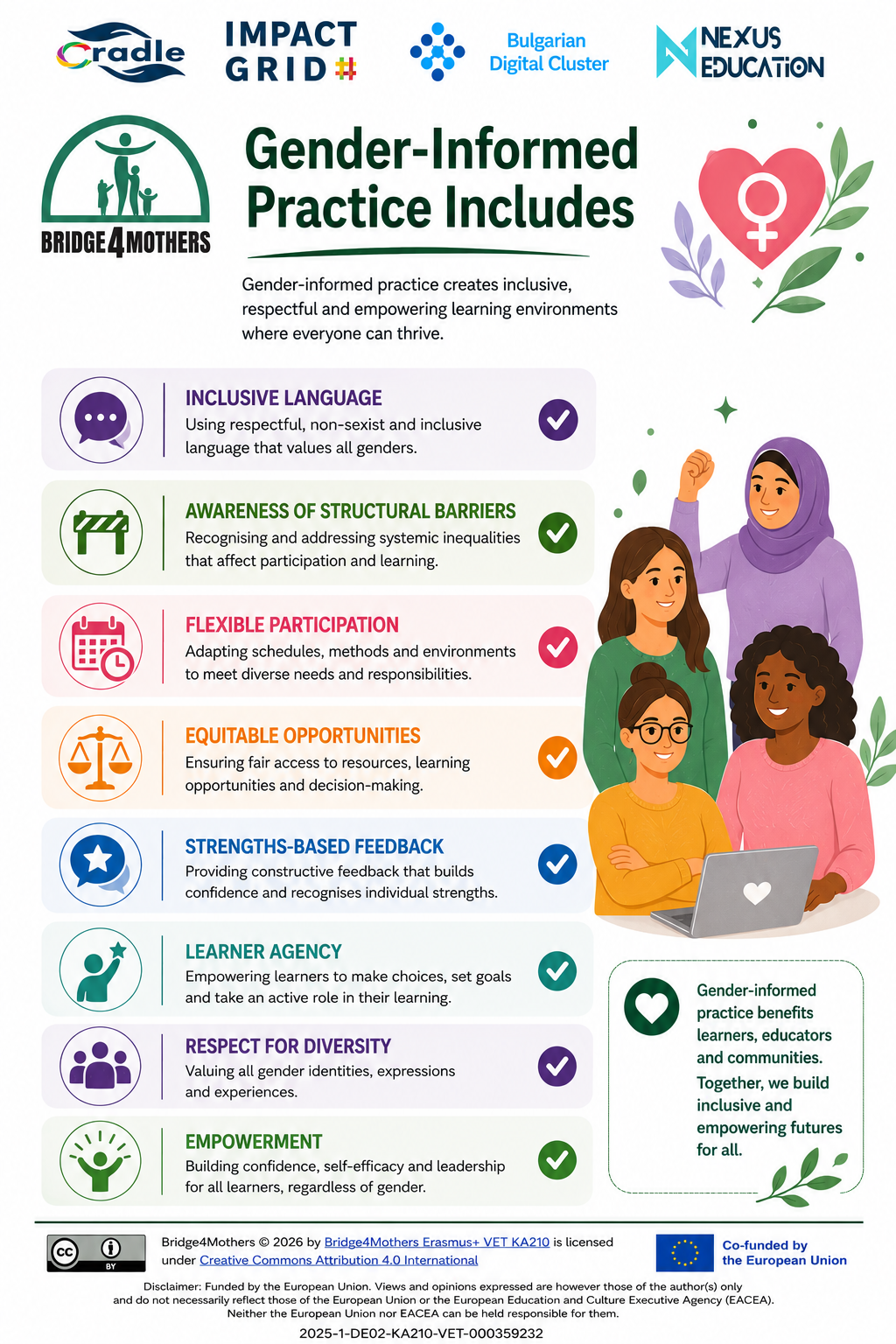
This module focuses on helping trainers create learning environments that are:
-
emotionally safe,
-
respectful,
-
inclusive,
-
collaborative,
-
and supportive for vulnerable learners.
For many vulnerable mothers, participation in education may involve:
-
anxiety,
-
low confidence,
-
fear of judgement,
-
social isolation,
-
or previous negative educational experiences.
Learning environments that prioritise:
-
empathy,
-
trust,
-
respect,
-
flexibility,
-
and emotional wellbeing
can significantly improve:
-
learner participation,
-
confidence,
-
engagement,
-
and long-term educational success.
This module introduces trainers to:
-
safe learning environment principles,
-
trauma-sensitive facilitation,
-
supportive communication,
-
peer-support approaches,
-
conflict resolution,
-
and confidence-building strategies.
Participants will reflect on:
-
group dynamics,
-
emotional safety,
-
communication practices,
-
and learner wellbeing in educational settings.
The module promotes:
-
compassionate facilitation,
-
collaborative participation,
-
and learner empowerment.
-
-
-
-
By the end of this module, participants will be able to:
-
create emotionally safe learning environments,
-
apply trauma-sensitive facilitation approaches,
-
strengthen respectful communication,
-
support learner wellbeing and participation,
-
manage group dynamics constructively,
-
and encourage peer support and collaboration.
-
-
-
-
-
-
Participants will:
-
strengthen supportive facilitation competences,
-
improve learner engagement strategies,
-
create more inclusive and respectful learning spaces,
-
and support learner confidence and emotional wellbeing more effectively.
-
-
-
-
-
-
Total Estimated Time:
5–6 Hours
Including:
-
presentations,
-
case studies,
-
reflection exercises,
-
collaborative discussions,
-
practical activities,
-
and assessment tasks.
-
-
-
-
-
-
-
-
Opened: Thursday, 15 October 2026, 12:00 AMDue: Thursday, 22 October 2026, 12:00 AM
-
-
-
-
-
To complete Module 5, participants must:
View all learning materials
Participate in discussion forum
Complete practical activities
Submit reflection assignment
Complete quiz/self-assessment
-
-
-
-
-
Congratulations on completing Module 5.
Safe and supportive learning environments are essential for:
-
inclusion,
-
participation,
-
confidence-building,
-
and learner wellbeing.
Empathy, respectful communication, and collaborative facilitation help create educational spaces where vulnerable learners feel valued, supported, and empowered to participate and grow.
-
-
-
-