MODULE 5 — Personal Data Protection & Cybersecurity
Section outline
-
-
-
-
Welcome to Module 5 of the Bridge4Mothers Digital Literacy & Upskilling Programme.
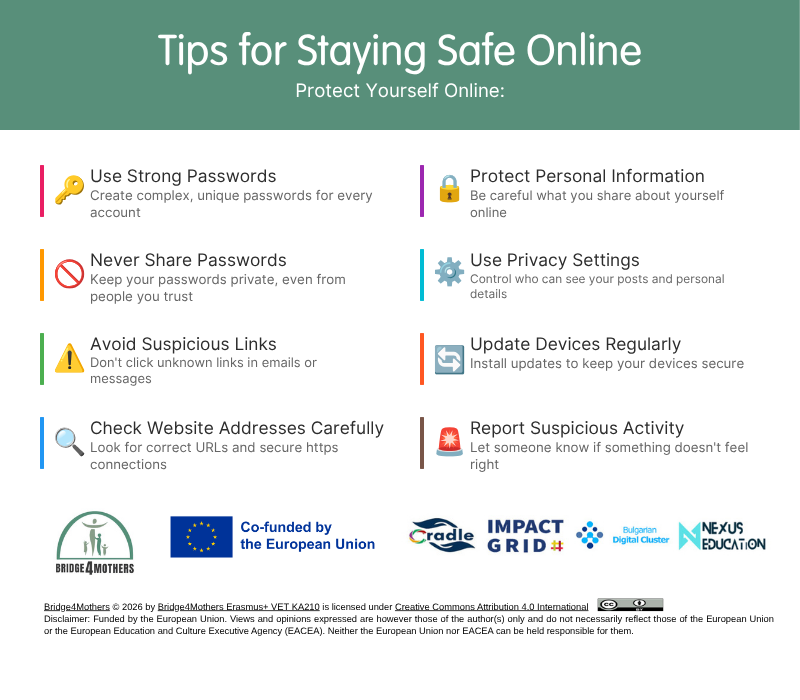
This module focuses on helping participants understand how to protect personal information, stay safe online, and use digital technologies responsibly.
As more daily activities move online, including:
-
communication,
-
banking,
-
education,
-
employment,
-
and social networking,
it becomes increasingly important to understand:
-
online risks,
-
digital safety practices,
-
and responsible internet behaviour.
This module introduces participants to:
-
personal data protection,
-
password security,
-
safe internet browsing,
-
cybersecurity basics,
-
online scams,
-
phishing,
-
and responsible digital behaviour.
The module supports participants in developing:
-
confidence,
-
awareness,
-
and safe digital participation skills.
-
-
-
-
-
-
By the end of this module, participants will be able to:
-
understand the importance of personal data protection,
-
recognise common online risks and scams,
-
create strong and secure passwords,
-
practice safe internet browsing,
-
protect personal information online,
-
and respond more safely to suspicious online activity.
-
-
-
-
-
-
Participants will:
-
improve awareness of cybersecurity risks,
-
protect personal information more effectively,
-
identify unsafe online behaviour,
-
use safer digital practices,
-
and strengthen confidence in online environments.
-
-
-
-
-
-
Total Estimated Time:
5–6 Hours
Including:
-
presentations,
-
tutorials,
-
practical exercises,
-
quizzes,
-
and reflection activities.
-
-
-
-
-
-
To complete Module 5, participants must:
- View all learning materials
- Complete cybersecurity activities
- Participate in discussion forum
- Submit practical assignment
- Complete quiz/self-assessment
-
-
-
-
-
Congratulations on completing Module 5.
You are developing important cybersecurity and online safety skills that can help protect:
-
your personal information,
-
your digital identity,
-
and your participation in online environments.
Safe and responsible digital behaviour supports confidence, independence, and positive digital participation.
-
-
-
